AspectJMethodBeforeAdvice:前置通知,AspectJ中 before 属性对应的通知(@Before标注的方法会被解析成该通知),在切面方法执行之前执行。 AspectJAfterReturningAdvice:后置通知,AspectJ中 afterReturning 属性对应的通知(@AfterReturning 标注的方法会被解析成该通知),在切面方法执行之后执行,如果有异常,则不执行。注意:该通知与AspectJMethodBeforeAdvice对应。 AspectJAroundAdvice:环绕通知,AspectJ中 around 属性对应的通知(@Around标注的方法会被解析成该通知),在切面方法执行前后执行。 AspectJAfterAdvice:返回通知,AspectJ中 after 属性对应的通知(@After 标注的方法会被解析成该通知),不论是否异常都会执行。
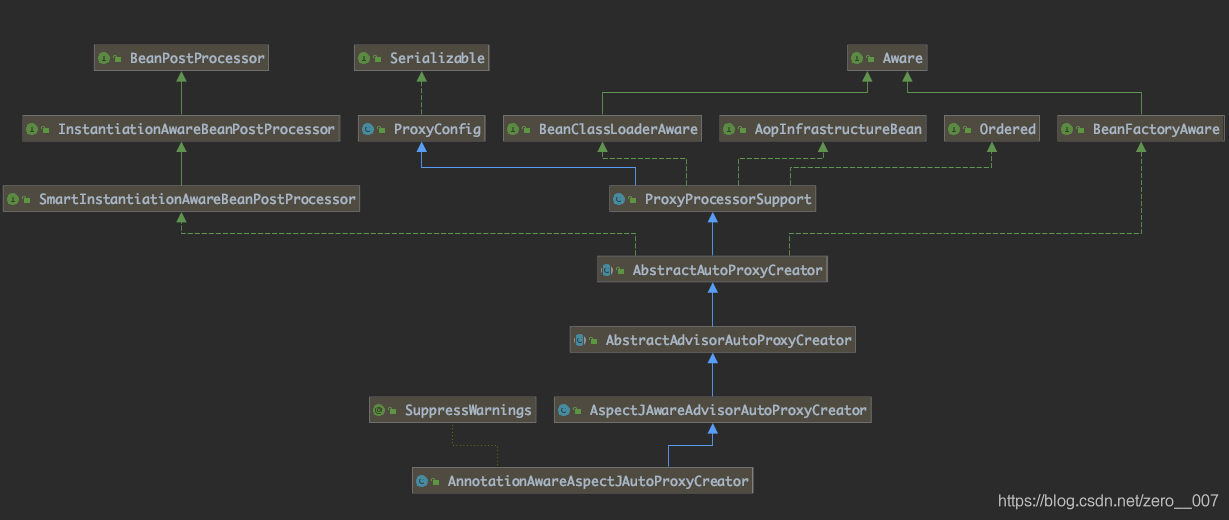
advisorCreator:代理机制,抽象类AbstractAutoProxyCreator的每个实现类代表着一种代理机制。默认情况下只使用一种代理机制。 继承 spring ioc的扩展接口 beanPostProcessor,主要用来扫描获取 advisor。包括有:
public class AopNamespaceHandler extends NamespaceHandlerSupport {
/** * Register the {@link BeanDefinitionParser BeanDefinitionParsers} for the * '{@code config}', '{@code spring-configured}', '{@code aspectj-autoproxy}' * and '{@code scoped-proxy}' tags. */ @Override public void init() { // In 2.0 XSD as well as in 2.1 XSD. registerBeanDefinitionParser("config", new ConfigBeanDefinitionParser()); registerBeanDefinitionParser("aspectj-autoproxy", new AspectJAutoProxyBeanDefinitionParser()); registerBeanDefinitionDecorator("scoped-proxy", new ScopedProxyBeanDefinitionDecorator());
// Only in 2.0 XSD: moved to context namespace as of 2.1 registerBeanDefinitionParser("spring-configured", new SpringConfiguredBeanDefinitionParser()); }
可以看出来,创建advisor的逻辑发生在扩展接口中的postProcessBeforeInstantiation,实例化之前执行,如果有自定义的TargetSource指定类,则直接生成代理类,这种情况使用不多,常规代理类还是在postProcessAfterInitialization中创建,也就是 IOC 最后一个扩展方法。 在bean实例化之后,调用postProcessAfterInitialization()来生成代理类,来看下里面的wrapIfNecessary()方法:
public Object getProxy(ClassLoader classLoader) {
   return createAopProxy().getProxy(classLoader);
}

protected final synchronized AopProxy createAopProxy() {
   if (!this.active) {
      activate();
   }
   return getAopProxyFactory().createAopProxy(this);
}

@Override
public AopProxy createAopProxy(AdvisedSupport config) throws AopConfigException {
   if (config.isOptimize() || config.isProxyTargetClass() || hasNoUserSuppliedProxyInterfaces(config)) {
      Class<?> targetClass = config.getTargetClass();
      if (targetClass == null) {
         throw new AopConfigException("TargetSource cannot determine target class: " +
               "Either an interface or a target is required for proxy creation.");
      }
      if (targetClass.isInterface() || Proxy.isProxyClass(targetClass)) {
         return new JdkDynamicAopProxy(config);
      }
      return new ObjenesisCglibAopProxy(config);
   }
   else {
      return new JdkDynamicAopProxy(config);
   }
}
if (this.advised.exposeProxy) { // Make invocation available if necessary. oldProxy = AopContext.setCurrentProxy(proxy); setProxyContext = true; }
// May be null. Get as late as possible to minimize the time we "own" the target, // in case it comes from a pool. // 获得目标对象的类 target = targetSource.getTarget(); if (target != null) { targetClass = target.getClass(); }
// Get the interception chain for this method. // 获取可以应用到此方法上的Interceptor列表 List<Object> chain = this.advised.getInterceptorsAndDynamicInterceptionAdvice(method, targetClass);
// Check whether we have any advice. If we don't, we can fallback on direct // reflective invocation of the target, and avoid creating a MethodInvocation. // 如果没有可以应用到此方法的通知(Interceptor),此直接反射调用 method.invoke(target, args) if (chain.isEmpty()) { Object[] argsToUse = AopProxyUtils.adaptArgumentsIfNecessary(method, args); retVal = AopUtils.invokeJoinpointUsingReflection(target, method, argsToUse); } else { // 创建MethodInvocation // 整个拦截链的工作逻辑都在这个ReflectiveMethodInvocation里 invocation = newReflectiveMethodInvocation(proxy, target, method, args, targetClass, chain); // Proceed to the joinpoint through the interceptor chain. retVal = invocation.proceed(); }
//…… return retVal; } finally { if (target != null && !targetSource.isStatic()) { // Must have come from TargetSource. targetSource.releaseTarget(target); } if (setProxyContext) { // Restore old proxy. AopContext.setCurrentProxy(oldProxy); } } }
@Override public Object proceed()throws Throwable { // We start with an index of -1 and increment early. if (this.currentInterceptorIndex == this.interceptorsAndDynamicMethodMatchers.size() - 1) { //如果Interceptor执行完了,则执行joinPoint return invokeJoinpoint(); } // 取得第拦截器链上第N个拦截器 ObjectinterceptorOrInterceptionAdvice= this.interceptorsAndDynamicMethodMatchers.get(++this.currentInterceptorIndex);
//如果要动态匹配joinPoint if (interceptorOrInterceptionAdvice instanceof InterceptorAndDynamicMethodMatcher) { // Evaluate dynamic method matcher here: static part will already have // been evaluated and found to match. InterceptorAndDynamicMethodMatcherdm= (InterceptorAndDynamicMethodMatcher) interceptorOrInterceptionAdvice; //动态匹配:运行时参数是否满足匹配条件 if (dm.methodMatcher.matches(this.method, this.targetClass, this.arguments)) { //执行当前Intercetpor return dm.interceptor.invoke(this); } else { // Dynamic matching failed. // Skip this interceptor and invoke the next in the chain. //动态匹配失败时,略过当前Intercetpor,调用下一个Interceptor return proceed(); } } else { // It's an interceptor, so we just invoke it: The pointcut will have // been evaluated statically before this object was constructed. //执行当前Intercetpor return ((MethodInterceptor) interceptorOrInterceptionAdvice).invoke(this); } }